I.
Executive Leadership
Strategic Architecture and Synthesized Frameworks
The Challenge: A high-level executive required a comprehensive organizational identity to bridge the gap between Western epigenetic science and traditional Indigenous healing practices. The client lacked a cohesive narrative and a functional business structure to secure high-level consulting contracts.
The Solution:
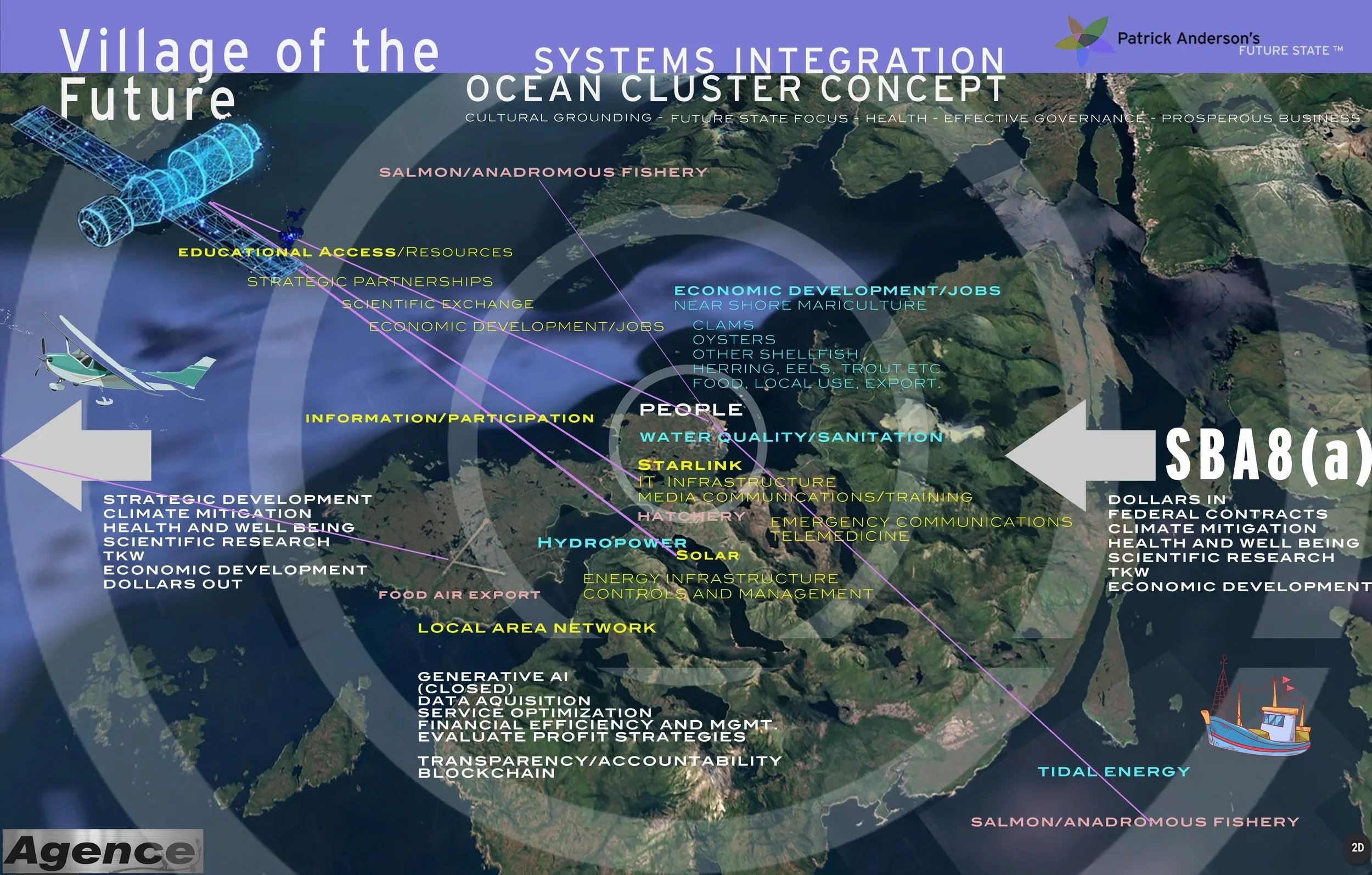
Conceptual Architecture: Designed a proprietary "translational" framework that synthesized complex systems-thinking with cultural heritage.
Content Strategy: Authored 100% of the site’s core copy, transforming abstract theories into actionable professional pillars.
Brand Persona Development: Engineered a high-authority public persona aimed at securing board-level influence and policy-making opportunities.
Strategic Organization: Built the navigational hierarchy and content flow to present a "vision-ready" organization for potential federal and state partners.
The Result: Delivered a turnkey digital and strategic platform that established the client as a thought leader in the intergenerational trauma space.
II.
University Master Plan with Complex Civic Integration
Project Title: "Climate Resilience is People" – WSU Vancouver Civic Integration Plan
This framework synthesizes the provided "Climate Resilience is People" central document into a structured, professional plan for civic partnerships, moving from abstract vision to a functional strategy for funding and implementation with Washington State University Vancouver.
1. Philosophical Framework: "Climate Resilience is People"
The core philosophy, developed by the Collective for Social and Environmental Justice (CSEJ), repositions the university as a civic anchor focused on community survival, economic opportunity, and environmental justice (p. 3). It operates on principles derived from Indigenous Haudenosaunee cultural practices and R. Buckminster Fuller's Design Science (p. 8).
Key Principles:
Equity/Righteousness: Ensures the welfare of all through justice and fairness (p. 8).
The Long View: Adheres to the Seventh Generation Principle, ensuring decisions honor those yet to be born (p. 8).
Interdependence: Recognizes the link between human well-being and the natural world, particularly the Columbia River ecosystem (p. 8).
Permeable Boundaries: Moves away from the traditional "ivory tower" model toward a consensus-based approach that integrates campus needs with broader Southwest Washington community needs (pp. 8-9).
2. Business Plan & Operational Strategy
The operational strategy is built on five programmatic components that are interdisciplinary and community-based (p. 3). The management structure is a "flat," hierarchy-free model designed for maximum participation and flexibility (p. 8).
Key Initiatives (The "What"):
Community Garden/Food System Justice Initiative: Addresses food insecurity and supply chain issues by fostering local, grassroots food systems on campus and in the community (pp. 3-4).
Thin Green Line People’s History Project: An open-source toolkit and archive to document the history of climate justice organizing and prevent the return of fossil fuel projects (pp. 3-4).
DOCumentary Arts Initiative: Provides media production skills and training with a focus on community health, healing, and well-being (pp. 3, 5).
Missing and Murdered Indigenous Peoples Initiative: Integrates attention to the crisis across the curriculum and faculty research, focusing on digital and theater-based storytelling (pp. 3, 6).
Outdoor Education & WSU Vancouver Barry Cain Canoe and Kayak House: Cultivates a connection to local land and waterways, combining mental/physical health benefits with an ecotourism hub and a "paddle up" cafe serving Indigenous foods at the waterfront (pp. 3, 7-8).
Operational Model (The "How"):
Consensus-Based Decision-Making: Encourages 360-degree input from students, faculty, and staff, though it can be time-consuming (pp. 8-9).
Youth Leadership: Prioritizes the expanded involvement of youth as action-researchers in all facets of the program (p. 4).
Staffing: A lean, project-focused team including Directors for each initiative, a General Manager, a half-time Director of Development, and 8 student organizers (pp. 9-10).
3. High-Level Grant Writing & Funder Outreach
The funding approach targets an unassailable proposition: "It benefits people, biodiversity, and environmental integrity" (p. 9). It minimizes risk by relying on community-based solutions rather than unstable federal policies (p. 9).
Messaging, Positioning & Targeting:
Positioning: The project is a major ally in ensuring a clean waterfront, stimulating sustainable economic development with living wage jobs, and transforming WSU Vancouver into a "magnet campus" (pp. 8-9).
Targeted Narrative: The messaging emphasizes creating new neighborhoods, eco-tourism, and outdoor sports destinations as alternatives to the "false promises of fossil fuel companies" (pp. 2-3).
Funder Alignment: The initiatives are designed to attract funding that supports ecosystem health, clean water, biodiversity, sustainability, salmon recovery, and housing/homeless services in the wake of federal rollbacks (pp. 2-3).
Key Funder Targets:
Private Foundations: Organizations focused on environmental advocacy, public health, food security, and Indigenous rights may be receptive to the documented history of success and specific project proposals (pp. 3, 5).
State & Local Government: The project provides data and policy support that aligns with local moratoria on fossil fuel transport, appealing to the Vancouver City Council and Port Commission (pp. 2-3).
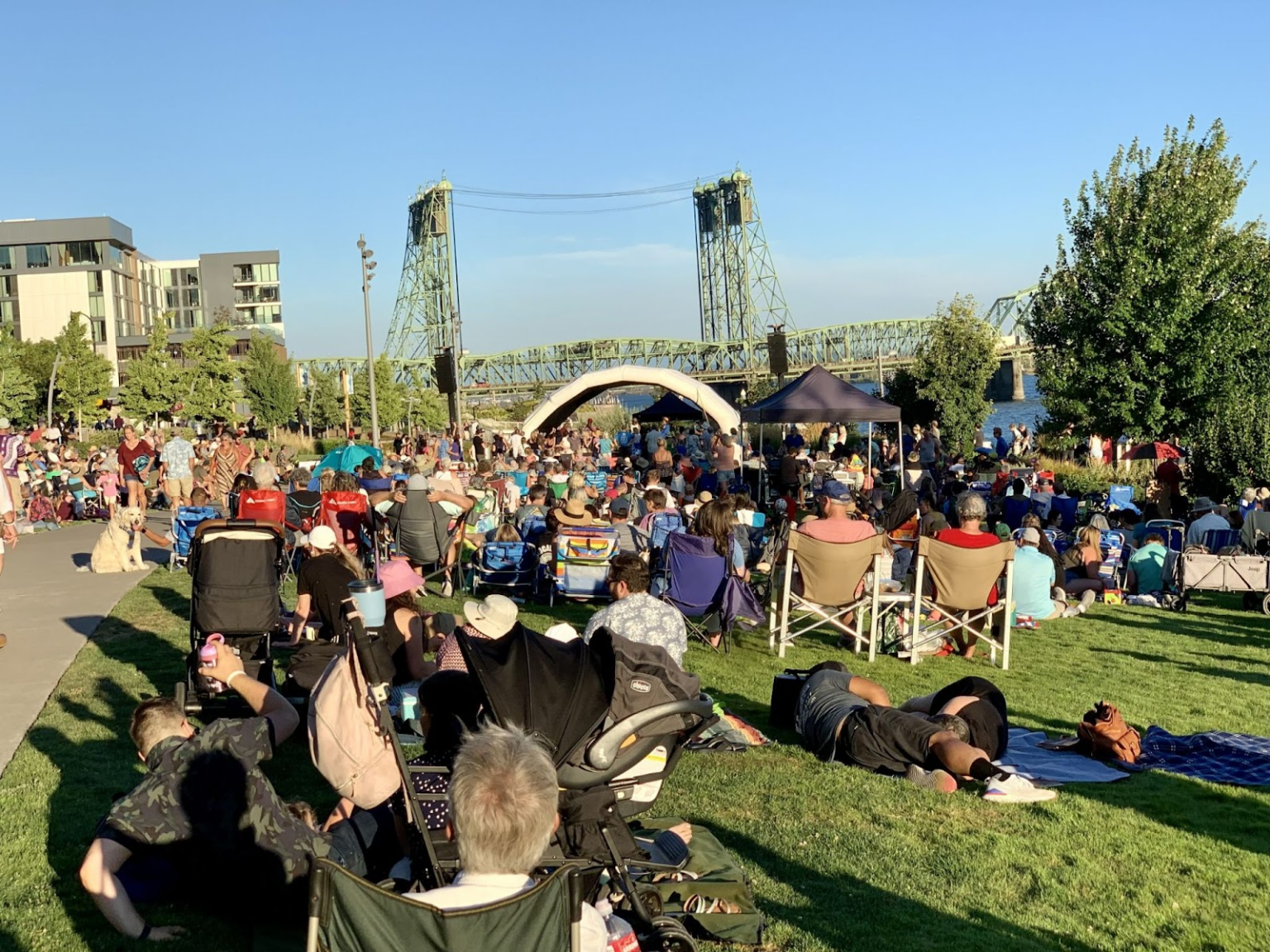
PHOTO : Crowd gathers at waterfront bandstand, Natalie Bicknell Argerious, TheUrbanist.org
Catalytic to my experience was the opportunity to partner with Lura Lee in creating a start-up called Upend Communications. Narrative Transformations ™ developed by Upend is a set of strategic solutions products embedded into our offerings today.