"The books are a continuation of the articles. The articles are a continuation of the radio documentaries. The radio documentaries are a continuation of the films. Traveling across space and time. The stories are the source.”
Robert Lundahl
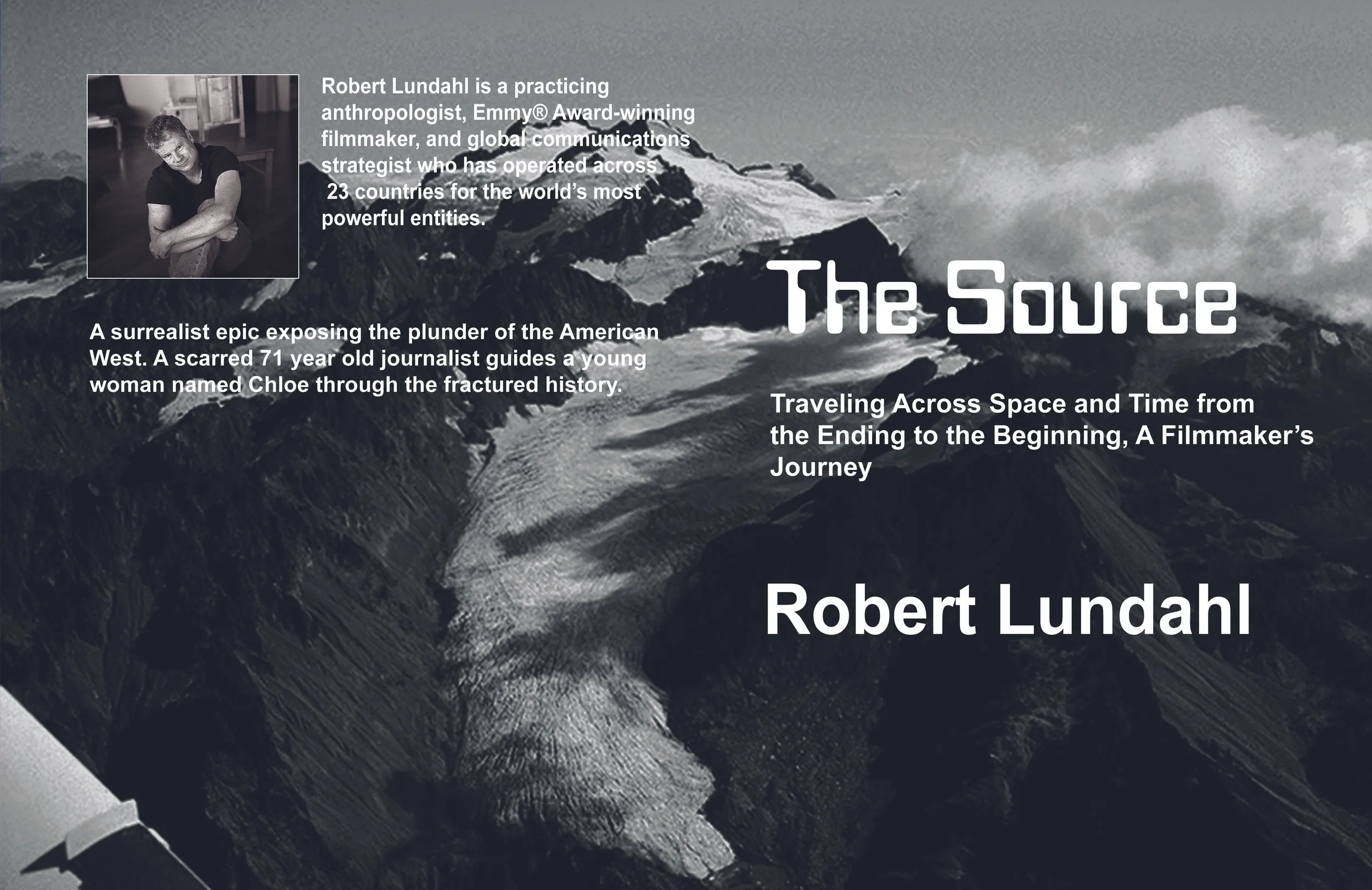
What happens when the entire American West is transformed into a bureaucratic extraction zone? In this sweeping, yet deeply personal anthology, filmmaker Robert Lundahl traces the hidden lines of corporate greed, broken treaties, and technocratic overreach that define the modern frontier.
Moving between historical eras and sacred landscapes with the haunting, time-bending fluidity of Tarkovsky's film Stalker, this narrative provides the connective tissue across a profound collision of cultures and values.
From the Bureau of Indian Affairs' colonial erasure to the modern one–dimensional, Bureau of Land Management permitting process, the book examines massive mining and energy extraction projects facilitated across three states.
Lundahl masterfully weaves together personal vignettes, legal corrosian, and indigenous resistance, revealing how the historic annihilation of Native tribes mirrors today's aggressive grading of the Mojave Desert ecosystems for energy production. The book strips away standard political comfort–zone, demonstrating that the historic fencing of the western frontier wasn't the end of a dark history—it was simply the blueprint for our collective future.
The Source: We're All on the Reservation Now is a visceral, prophetic investigative document that fundamentally challenges the meanings of sovereignty, ancestry, and human survival in an age of corporate feudalism. It is a vital read for our times today.

Before the cameras rolled across twenty-three countries, there was Pasadena. Growing up under the heavy, rigid shadow of a Cold War Navy deck commander, filmmaker Robert Lundahl learned early that survival meant constructing his own escape hatches. What follows is a brilliant, David Lynch-style ungluing of an elite post-war community—a psychological unraveling here referred to as the Pasadena Diaspora.
From building an unwrranteed battleship-gray engine swap behind a childhood swingset to stepping directly into a smoke-filled, cocaine-fueled backstage funk circus at Madison Square Garden with Bootsy Collins and George Clinton, this colorful photograpic memoir strips away conventional Hollywood clichés to expose raw, lived reality.
But the cinematic orbit expands far beyond a California arroyo. As the digital exhuberace of the 2000s explodes, the lens shifts to the chaotic tech vanguard of offshore software programming armies in Guangdong, China, before colliding with the paranoid, foil-lined window defense contractor vaults of Las Vegas and New Mexico.
Here, space weapons tracking, administrative drugging, and industrial environmental poisonings reveal the terrifyingly real price of modern empire.
Linda Vista is an investigative, deeply compelling document of a dark post-war American underbelly and the relentless, lifelong pursuit of individual independence against corporate gravity. This book is a masterclass in historical irony and structural defiance.
The Journalism Behind the Books
Associated Press Wire Feature: Read the syndicated report on Native American Groups Suing to Stop Solar Projects via the San Diego Union-Tribune.
The Los Angeles Times Investigation: Explore the official newsroom feature detailing how Solar Projects Impact Native American Life by reporter Louis Sahagun.
The Environmental Policy Conflict: Review the analytical piece on Out-of-Control Environmental Policies published via East County Magazine.
The Media Infrastructure: Form Follows Function
The Forensics (The Lawsuit): The initial investigative reporting on the La Cuna de Aztlan Legal Challenge against the BLM establishes the baseline data, documenting the corporate rush to grade 23,842 acres of pristine Southern California desert values.
The Visualization (The Film): The feature documentary "Who Are My People?" provides the immediate, contextual physical geometry, giving faces, voices, and land to the story of the industrial encroachment of the Mojave, Sonoran, and Colorado ecosystems.
The Dissemination (The Articles): A continuous series of front-line articles syndicated globally scales the message, transforming localized desert exploitation into an urgent issue of international environmental policy and indigenous sovereign rights.
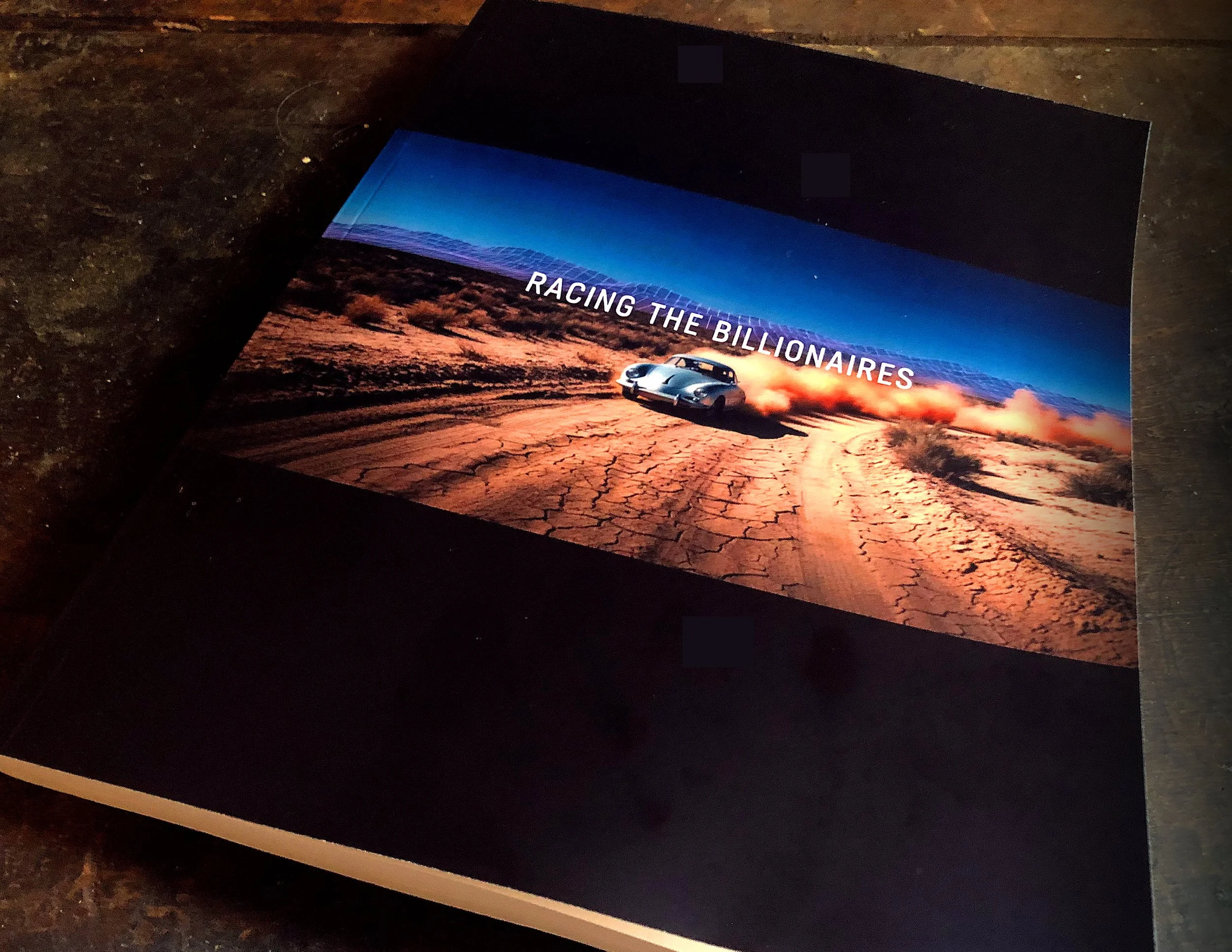
The Realization (The Screenplay): The narrative script "Racing the Billionaires" delivers the final, permanent psychological distillation, turning real-world infrastructure battles into a high-stakes, cinematic corporate thriller.
BOOK DESCRIPTION
The digital cloud does not exist in an ethereal sky; it is rooted in concrete, steel, and a predatory, unsustainable demand on the physical resources of the planet.
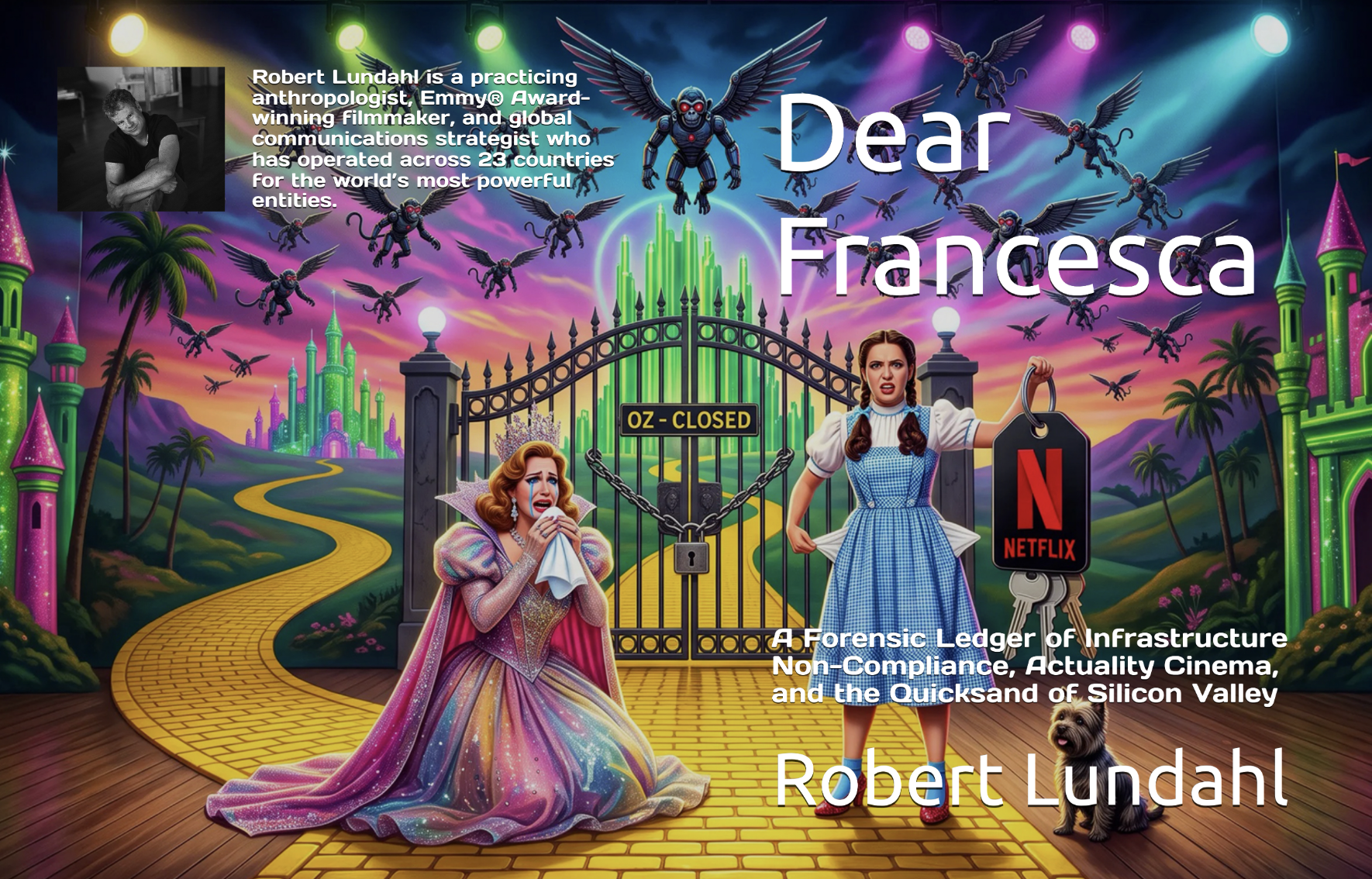
In Dear Francesca, independent filmmaker and investigative broadcaster Robert Lundahl delivers a fierce, un-redactable forensic ledger that strips away the polished, greenwashed simulation of modern Hollywood and Silicon Valley. Originally dropped as an urgent series of live, synchronized public wire blasts, this 80-page masterwork exposes the hidden infrastructure-level liabilities and geopolitical quicksand underpinning today’s major streaming monopolies.
When entertainment giants like HBO, Warner Bros. Discovery, and Paramount fuse their global distribution loops straight into debt-heavy AI cloud hyperscalers, they aren't just buying server space—they are operationally financing global resource destruction.
Across nineteen sequential chapters and hard evidence logs, Dear Francesca charts a cascading reality that standard corporate filters cannot cheat:
The Outsourced Engine: How legacy studio mergers and the looming "2026 Contract Cliff" are violently forcing elite creative slates into homogenized, data-harvesting vaults.
The Physical Reality of the Ground: The brutal environmental toll of data center hyper-clusters, from the systematic 79% expropriation of the Colorado River to the toxic desertification of ancestral delta estuaries.
The Imperial Core: The aggressive push for un-tested Small Modular Nuclear Reactors (SMRs) to feed undisclosed AI data grids right outside native borders—the ultimate domestic blueprint of #TechnoColonialism.
The Sovereign Collapse: The volatile, high-stakes exposure of anchoring Western media expansion to unstable sovereign debt networks, unfolding parallel to a tactical "f***-up of epic proportions" along the Red Sea coast.
Backed by an unassailable lineage of actuality cinema, this book serves as both a high-velocity tech satire and an airtight legal trap. Included within this print edition are the raw network telemetry logs—documenting the precise pre-dawn server sweeps and direct corporate workstation hits left behind by internal studio compliance teams frantically auditing Lundahl’s registries.
We do not engage in studio loops, generic delays, or committee options. The curtain is officially up, the wizard is unmasked, and Oz is closed. Step out of the simulation and lock down the unvarnished receipts of our era.